Homes in England Record Median EPC Score of 69

Homes in England Record Median EPC Score
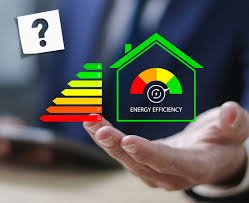
Homes in England recorded a median Energy Performance Certificate (EPC) score of 69, placing them in Band C, based on records covering the ten years up to March 2025.
The latest data shows homes in Wales recorded a slightly lower median EPC score of 68, corresponding to Band D, highlighting ongoing regional differences in energy efficiency across the UK housing stock.
Regional performance broadly consistent
Across English regions, energy efficiency performance is broadly similar. London, the East of England, and the South East all recorded a slightly higher median score of 70 (Band C). In contrast, Yorkshire and The Humber recorded the lowest regional median score at 68 (Band D).
These figures suggest that while regional variation exists, much of England’s housing stock clusters around the boundary between EPC Bands C and D.
New-build homes show gradual improvement
New dwellings continue to demonstrate higher levels of energy efficiency than older housing stock, with gradual improvements over time.
In England, the median EPC score for new homes increased from 82 in the five-year period to March 2013 to 84 in the five-year period to March 2025. A similar trend was observed in Wales, where the median score for new dwellings also rose from 81 to 84 over the same timeframe.
This reflects incremental gains in building standards, insulation, and energy efficiency requirements for newly constructed homes.
Wide variation at local level
At a more granular level, significant variation exists between local areas.
In England, median EPC scores across middle-layer super output areas ranged from 85 (Band B) at the upper end to 48 (Band E) at the lower end. Higher-scoring areas were predominantly urban locations with a greater concentration of newer housing and regeneration developments.
Conversely, the lowest scoring area recorded a median EPC score of 48, reflecting older housing stock and more limited energy efficiency upgrades.
In Wales, median EPC scores across comparable areas ranged from 83 (Band B) down to 46 (Band E). Several urban and suburban areas recorded the highest scores, while more rural and coastal locations tended to record lower median ratings.
Rural areas generally score lower
The data indicates that smaller rural areas typically record lower median EPC scores than urban or large rural authorities. This trend reflects the prevalence of older, harder-to-treat properties in rural locations, including solid-wall homes and off-gas properties.
However, the pattern is not universal, with some rural local authorities performing comparatively well due to higher levels of retrofit activity or newer housing stock.
Heat pump adoption varies widely
The proportion of homes listing a heat pump on their EPC remains relatively low overall but varies significantly by location.
Some local authorities recorded notably higher uptake, with over 10% of properties listing a heat pump, while most areas remain well below this level. Uptake appears strongest in certain rural and semi-rural locations, where alternative heating systems are more common.
Implications for future energy standards
The findings highlight the challenge of raising energy efficiency standards across the existing housing stock, particularly as policy proposals increasingly focus on achieving higher minimum EPC ratings.
While new-build homes continue to improve, much of the UK’s housing stock remains clustered around EPC Bands C and D, suggesting that widespread upgrades will be required to meet future targets.
Progress is likely to depend on a combination of funding support, affordable retrofit solutions, and practical policy implementation that reflects the diversity of housing types and regional conditions.